Executing a multiplatform launch can be challenging, with lack of bandwidth being a common hurdle to launching a game on multiple platforms. We’ve gathered industry-leading experts to provide advice and share their multiplatform game creation experiences.
Join us on October 4, 2022 at 11:30am ET / 8:30am PT for a free roundtable to learn about common challenges that could affect your multiplatform launch. Plus, get expert insights and tips to help you overcome these obstacles and ship successfully.
Listen as experts from Roll7 and Navegante provide insight on:
Understanding the future costs of multiplatform games
Proactively identifying potential problems when developing a multiplatform game
Identifying the skills a team needs to be successful in multiplatform development
Ensuring the best player experience when bringing your game to new platforms
Planning the marketing for a game’s multiplatform release
American Cinematography Magazine / Game On: Game-Engine Technology Expands Filmmaking Horizons / August 14, 2020 / Noah Kadner
--reposted--
“What directors want are iterations. They want to find
all the possible challenges early, so the faster you can see a result,
understand the issues and create another iteration, the better.
Real-time engines make that process happen instantly. It’s just like
playing a video game.”
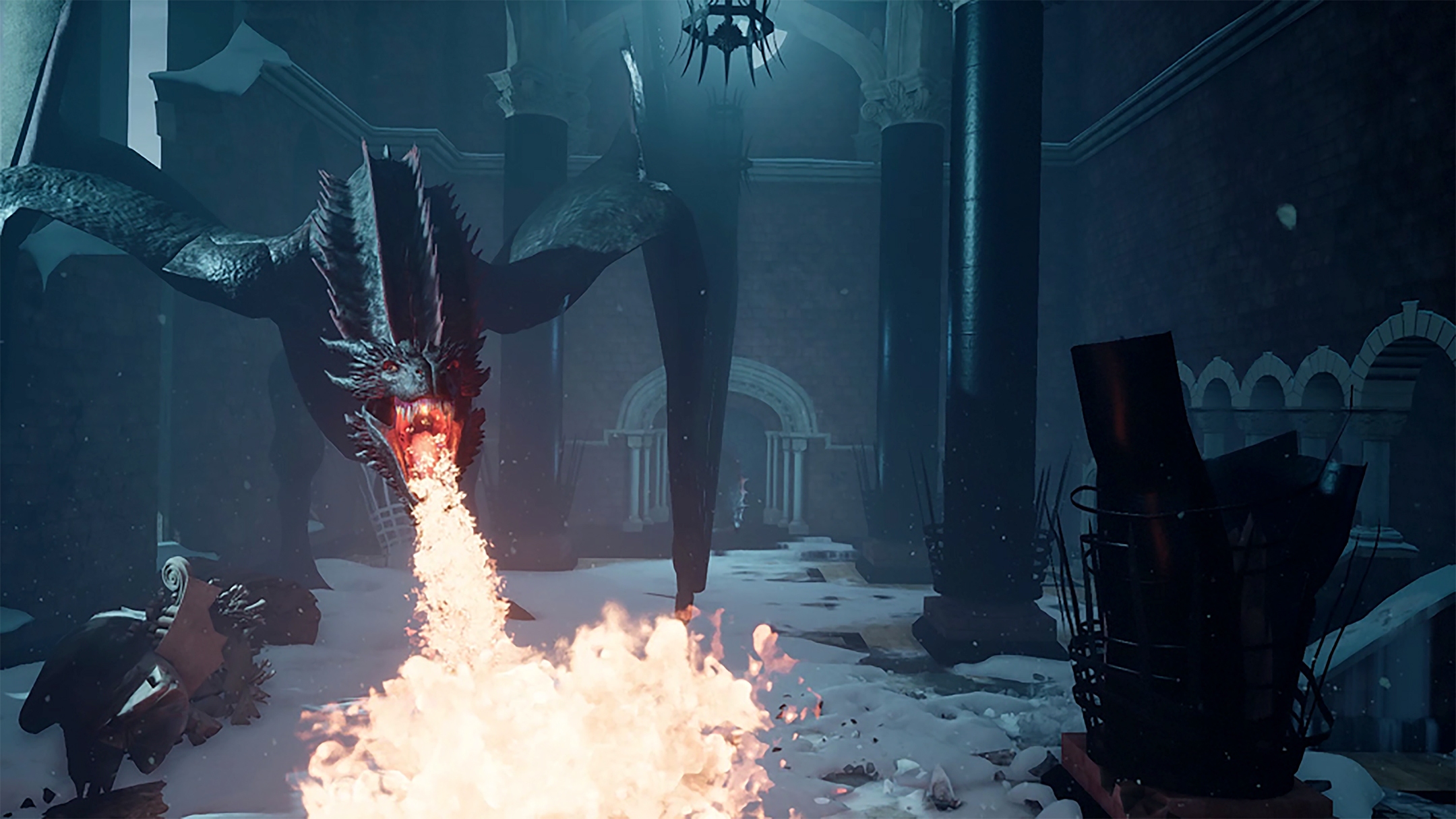
At
top, for Season 8 of HBO’s Game of Thrones, The Third Floor offered
real-time rendering during production — which, for example, helped
represent a dragon (pictured here) as shots were composed, framed and
performed. The company also provided virtual versions of story locations
for preproduction “scouting.”
The Mandalorian image by François Duhamel, SMPSP, courtesy of
Lucasfilm Ltd. Cine Tracer image courtesy of Matt Workman/LED volume
photo by Mike Seymour. The Lion King unit photography by Michael Legato, courtesy of Disney Enterprises, Inc. Game of Thrones image courtesy of HBO and The Third Floor, Inc.
Game engines such as Unreal Engine and Unity
were, as their umbrella term implies, originally designed for the
development of real-time applications, aka video games. In recent years,
advances in both hardware and software have ushered these engines into
the purview of cinematographers. Game engines are now used to create
many forms of visualization for filmmakers, including previs, techvis
and postvis — and even final in-camera movement and imagery for such
productions as The Lion King(AC Nov. ’19; see sidebar below) and The Mandalorian (AC Feb. ’20).
For
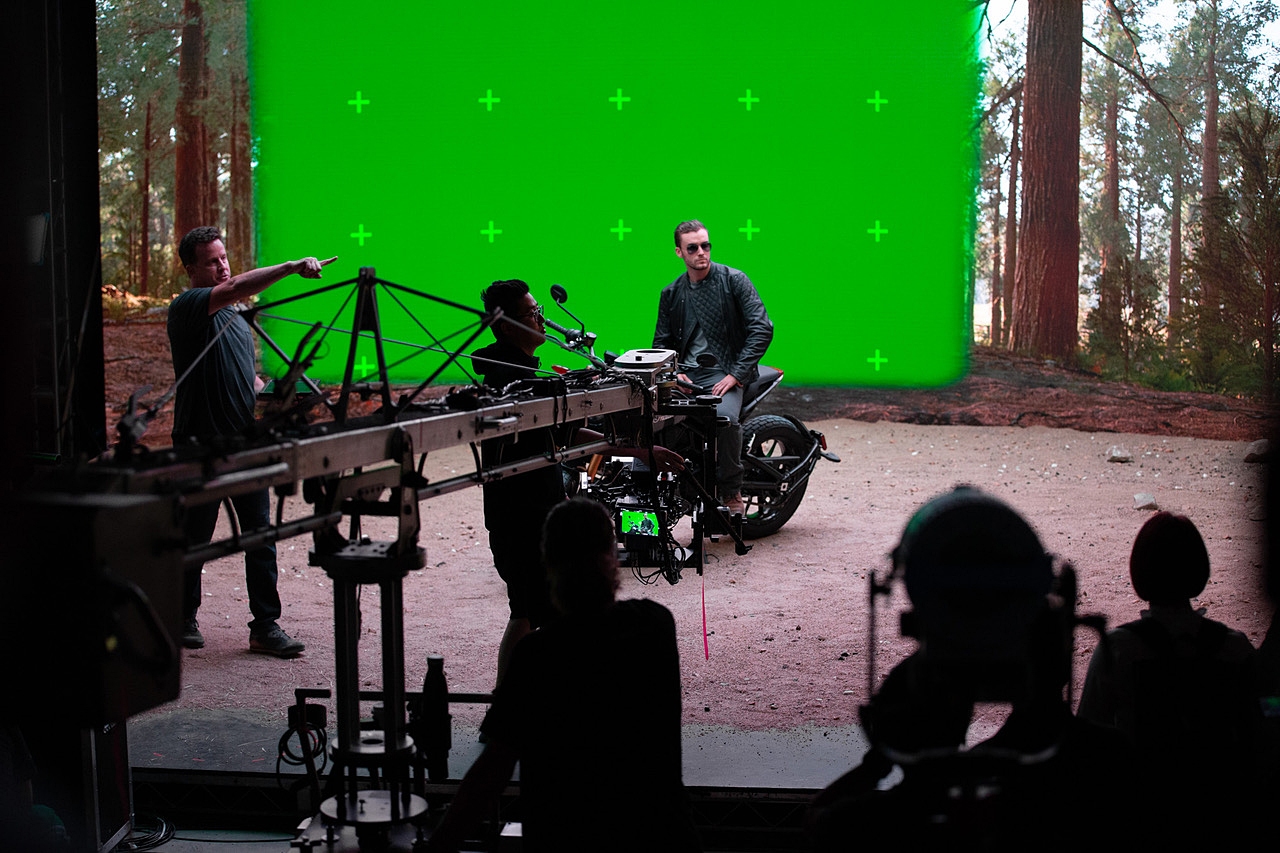
The Mandalorian, an LED-wall system known as “the Volume” allowed the
filmmakers to capture actors in a photo-real (or nearly so) environment,
in-camera and in real time, with the aid of Epic Games’ Unreal Engine.
Traditional 3D animation applications such as Autodesk’s Maya and 3ds
Max have long played a significant role in visual effects. Their
comparatively slower performance, however, has seen their benefit
focused more on pre- and postproduction, where time is somewhat less
critical than in live-action production. These 3D apps prioritize final
image quality over performance; as a result, image render times can
easily stretch into hours or even days per frame, depending on the
complexity of the shot and the computational power of the hardware.
By contrast, game engines were initially optimized for speed first
and image quality second, in order to support gameplay in real-time,
often at frame rates of 60 frames per second or more. And in the past
few years, major technical advancements in the graphics-processing unit
(GPU) of computers have enabled such engines to render
production-quality imagery while maintaining their real-time speed.
Commensurate with these hardware improvements, developers such as
Epic Games (creators of Unreal Engine) and Unity Technologies (creators
of Unity) have optimized their software for direct inclusion into the
production pipelines of features and television. These changes are
intended to support the crossover between traditional cinematography and
computer-generated imagery — a dynamic that can serve filmmakers in a
whole host of ways.
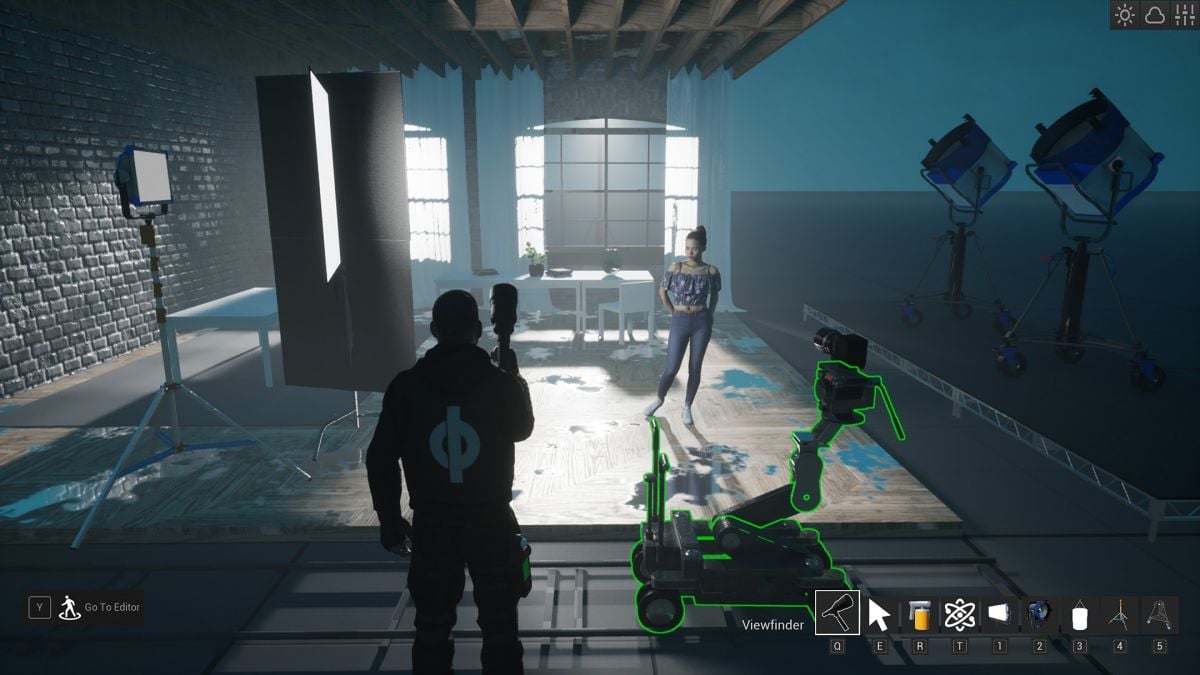
Matt Workman, a cinematographer
and software developer, is working to erode even further the boundaries
between filmmaking and CG with his creation of Cine Tracer,
a real-time cinematography simulator built with Unreal Engine. The
application — offered directly to filmmakers — enables the viewing of
real-world camera and lighting equivalents in simulated, user-designed
movie sets to produce highly accurate shot visualization.
Director of photography and previs artist Matt Workman’s real-time
“cinematography simulator” Cine Tracer is powered by Unreal Engine.
(Screen capture.)
“My background includes about 10 years of traditional cinematography,
mostly in commercials around New York City,” Workman says. “During that
time, I worked with a lot of visual-effects companies on effects-heavy
commercials — so I started creating previs tools to communicate in 3D
and plan with the teams. A couple of years ago, I started developing
Cine Tracer to handle that workflow more efficiently. I [designed] it as
a video game [that’s controlled similarly to playing a third-person
shooter game], but it’s intended to help filmmakers quickly visualize
their shots.
“I went to school for computer science, but I’ve always been
tinkering with 3D,” he says. “Luckily, it’s 2020 and there’s YouTube, so
the amount of available free education is incredible, as long as you
have the time and the patience to learn.
“Most cinematographers who are on the technical side pick up
[game-engine-powered previsualization] very quickly. If you want to add
light coming through the window, the steps to get there are very quick.
It’s the same way you do it in the real world.”
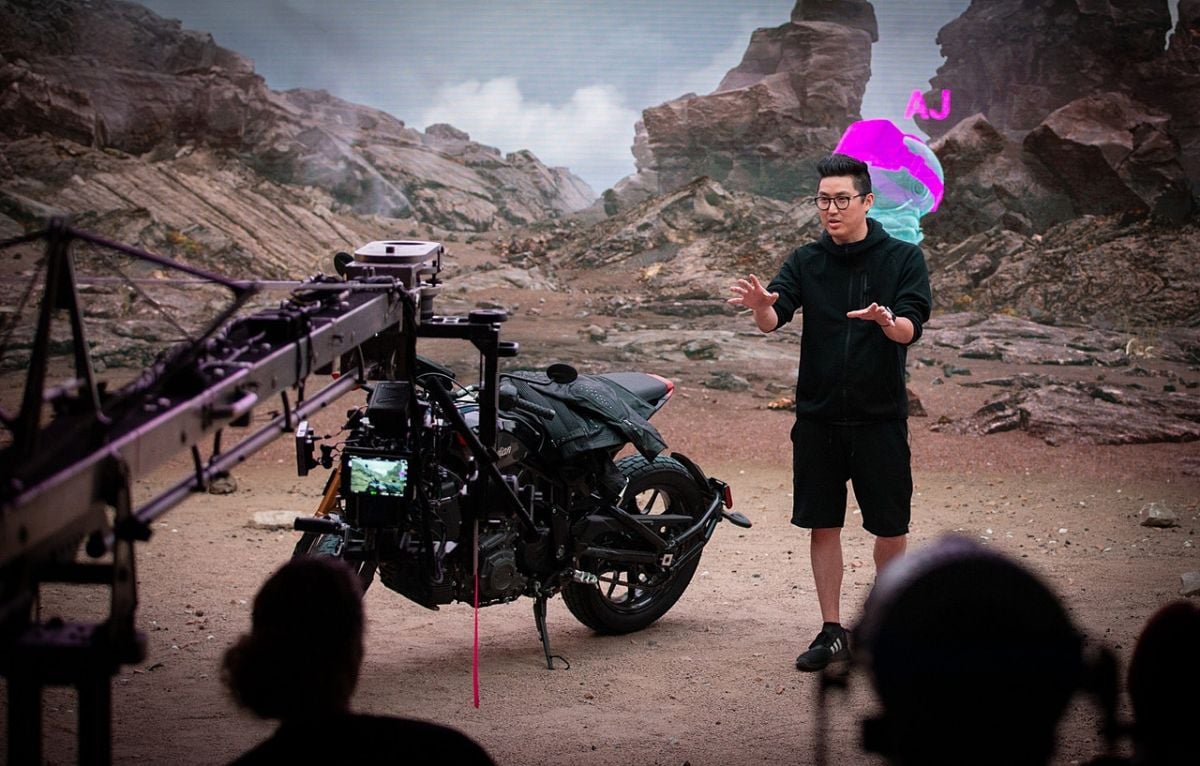
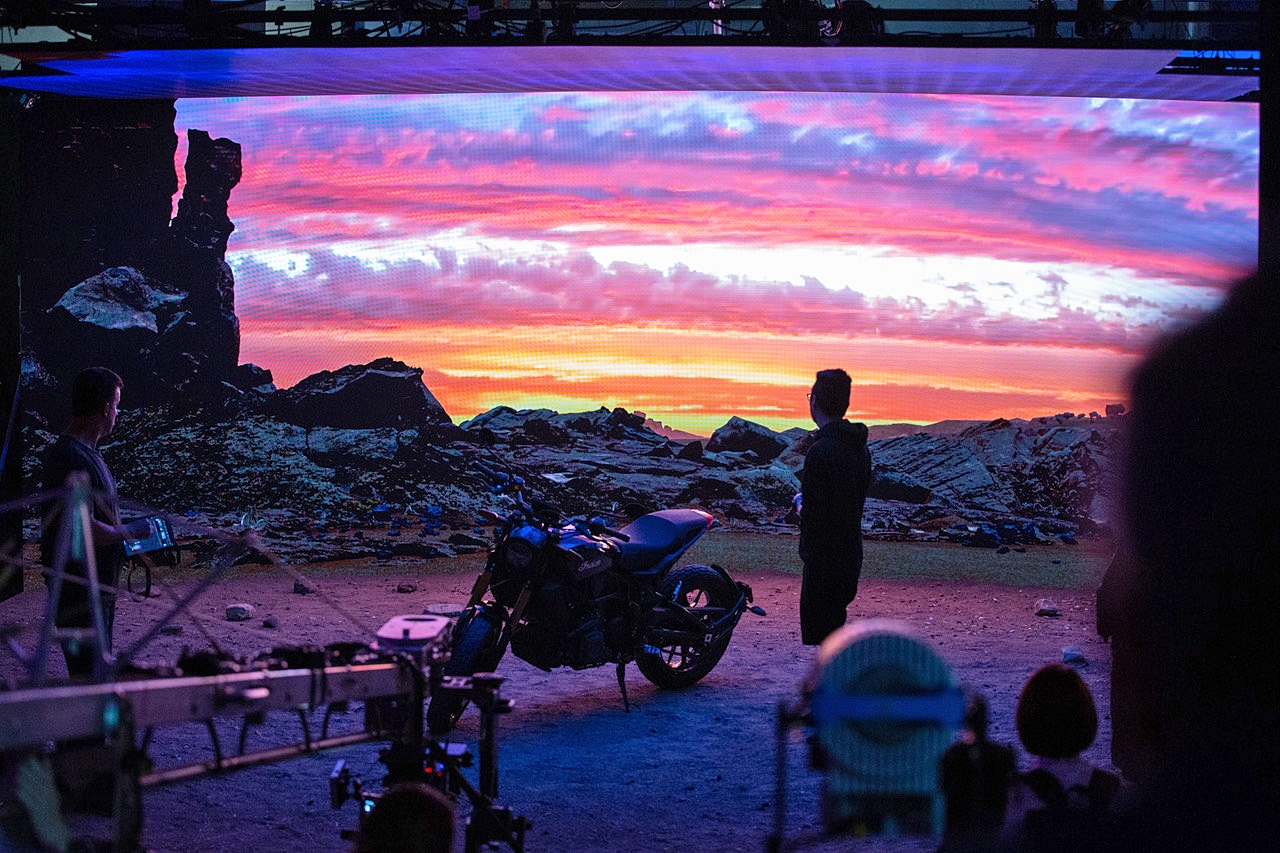
Workman at a demo of an LED Volume. The realistic background is actually an image that appears on the LED wall.
Regarding the primary advantage that real-time engines have over the
more traditional computer-animation software, Workman notes, “The
iteration time is much faster. If you want to see a camera move [for a
specific shot] in order to determine, for example, what it would look
like if you start close and then pull out wide — to see that change with
Maya, you’re taking up to a couple of hours to render maybe 120 frames
at high quality. In Unreal, that change happens instantly.”
Visualization studios like The Third Floor
have leveraged Unreal and other real-time engines on projects for the
past several years to design previs, techvis and postvis services, and
other forms of animation used in various phases of the production chain.
The Third Floor’s credits span multiple Marvel movies, The Rise of Skywalker, (AC Feb. ’20) and other recent Star Wars films, as well as popular episodic series such as The Mandalorian and Game of Thrones (AC May ‘12 and July ‘19).
Casey Schatz, The Third Floor’s head of virtual production, has worked on such projects as Thor: Ragnarok (AC Dec. ‘17), Gemini Man (AC Nov. ‘19) and The Mandalorian, and has helped innovate everything from flame-throwing motion-control robots to real-time virtual eyelines.
In addition to the obvious benefits of real-time rendering, Schatz,
sees these software and hardware innovations as facilitating greater
direct collaboration between studios like The Third Floor and
cinematographers. “Historically, as previs creators, we were brought in
very early, often before the DP was even hired,” he says. “So a certain
amount of work had already been done, and when the cinematographer
finally came on, they often felt like they were just painting by
numbers. No one in visual effects wants that approach. We’re all trying
to blend in with the wheel of filmmaking that’s existed since the
Lumière brothers.
“Just a few years ago, game engines weren’t as conducive to
moviemaking. Unreal’s virtual camera didn’t have a focal length or a
film back [aka aperture gate] — it just had a field of view. Now there’s
focal length, film backs, depth of field, f-stops, ISO and shutter
speed. Epic even added the ACES color workflow into the rendering
pipeline.
“A respect for and acknowledgment of traditional filmmaking has made
its way into the software,” Schatz adds. “So you can say, ‘I’m shooting
anamorphic with Panavision Primos,’ and we’ll have a menu of those exact
focal lengths so that you can’t previsualize a focal length that
doesn’t exist in your real lens kit.
“The goal has always been that even someone that has never touched a
computer before, but is a remarkable cinematographer, can sit down next
to a computer artist and talk in the language that they’re comfortable
with — f-stops, T-stops, shutter speeds, film ISOs, grain, bounce light,
diffuse light — the traditional cinematography terms that have existed
for more than 100 years.” — Casey Schatz, The Third Floor’s head of virtual production
“I’m working on the Avatar sequels now using Gazebo,
Weta Digital’s proprietary real-time engine,” he says. “Russell
Carpenter [ASC], the movies’ cinematographer, sat down with the lighters
before we did any of our live action in New Zealand. Together they set
the tone, the mood, the general key-light direction, the key-to-fill
ratio, et cetera; all of this was done using [cinema terminology]
Russell is accustomed to. Thus, the line in the sand between traditional
cinematography and computer graphics is disappearing more and more
every day.”
Indeed, the rendering time of high-resolution interactive imagery has
advanced to the point that it can actually appear onscreen as-is or
with minimal adjustments in post — as employed, for example, on The Mandalorian.“That was our goal,” said Greig Fraser, ASC, ACS (who shot the Disney Plus Star Wars series along with Barry “Baz” Idoine), as reported in AC’s
February 2020 issue. “We wanted to create an environment that was
conducive not just to giving a composition line-up to the effects, but
to actually capturing them in real time, photo-real and in-camera, so
that the actors were in that environment in the right lighting — all at
the moment of photography.”
When asked which specific advancements in real-time engines have
pushed forward their synergy with traditional cinematography, Schatz
explains that the ability to simulate bounce light, something so
fundamental to traditional cinematography, is a game changer because
only recently could this happen in real time or even close to it.
“[During a previs session] a traditional cinematographer could be
looking at a shot and say, ‘If we put a Kino Flo 6 feet away and add a
bounce card, what would be the result?’ We can now show that result very
quickly and accurately. Prior to these advancements, computer lighting
was more analogous to theatrical lighting; you could aim a light and
cast a shadow, but then you would have to cheat a bounce light by adding
other lights to the sides at lower intensities.”
One of Schatz’s Third Floor colleagues, real-time developer Johnson Thomasson (The Mandalorian, Venom, Godzilla: King of the Monsters [AC
June ‘19]), is quite directly involved with the intersection of
live-action cinematography and real-time animation — specifically via
motion capture and “virtual-camera sessions.”
“One of the major benefits to real-time animation is ‘practice time’ for the filmmakers,” Thomasson says. “We worked on Christopher Robin,
and director of photography Matthias Koenigswieser was able to use a
virtual camera rig, playing back animation from the film and recording
his camera motion so he could practice operating. He was able to
directly experience the size difference between 12-inch tall Piglet and
[for scenes set in the title character’s early years] 4-foot-tall
Christopher Robin.
“It was a real challenge framing both of them, and something he
hadn’t considered before coming to our virtual-camera sessions,”
Thomasson continues. “It allowed Matthias to design his compositions
ahead of the actual production. He was shooting with an empty frame
[aka, a clean plate] on the day, but having rehearsed virtually, he
already knew what the right framing felt like. When directors and DPs go
through a virtual-camera session, they discover new ideas, and they’re
exploring, expanding and coalescing their creativity.
“Another benefit is the physical representation of depth of field,
which has never been rendered well in previs in the past,” Thomasson
adds. “Unreal’s depth-of-field camera model is based on real-world
cameras. So a cinematographer can ask which stop we’re at in a
virtual-camera session and get an answer that reflects a physically
accurate visual model. In my experience, when DPs learn about that
capability, they want to take advantage of it, because depth of field is
one of the strongest tools in their toolset for communicating their
choices in cinematic language early on in preproduction.
“For directors who are not veterans of giant visual-effects tentpole
films, it’s a new experience when they first get to the set. But
[prepping] in a low-pressure, small-audience situation, and exploring
and practicing via [real-time interactive previs], prepares them for the
set like nothing else could.”
Looking toward the future, Schatz sees game engines becoming further
entwined with live-action cinematography. “The hardware and software are
going to [continue to advance], and it might almost become
indistinguishable in terms of which imagery is real-time and which
isn’t,” he says. “This is in service of the story and not to show off
the technology. The motto of the Previsualization Society is ‘fix it in
pre.’ The more creative decisions you can interactively figure out
before you get on set, the better.
“The goal has always been that even someone that has never touched a
computer before, but is a remarkable cinematographer, can sit down next
to a computer artist and talk in the language that they’re comfortable
with — f-stops, T-stops, shutter speeds, film ISOs, grain, bounce light,
diffuse light — the traditional cinematography terms that have existed
for more than 100 years.”
Workman adds, “What directors want are iterations. They want to find
all the possible challenges early, so the faster you can see a result,
understand the issues and create another iteration, the better.
Real-time engines make that process happen instantly. It’s just like
playing a video game.”
Prep Becomes Production
Society
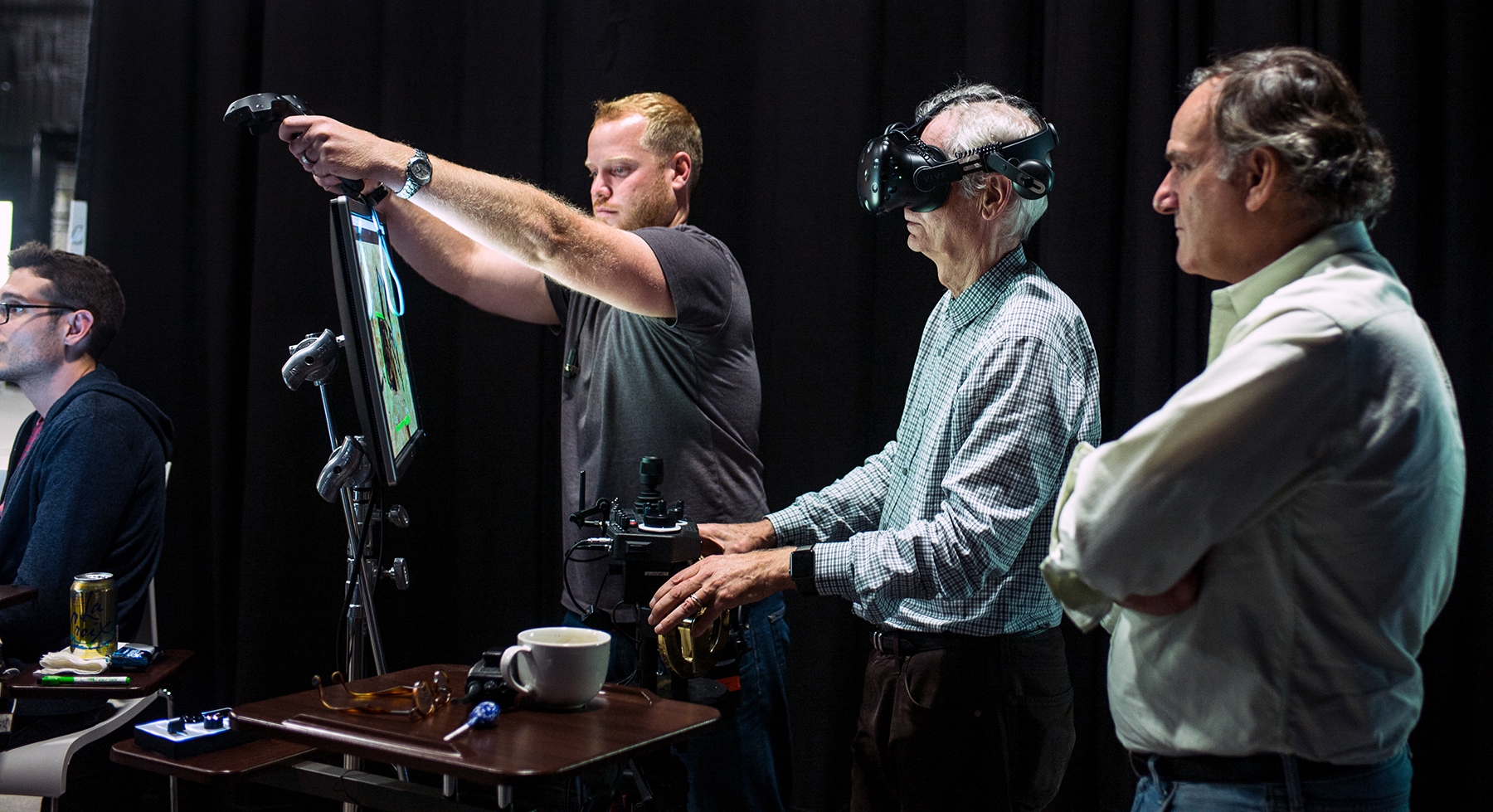
members Caleb Deschanel (wearing goggles) and Robert Legato (right),
alongside Magnopus virtual-production producer A.J. Sciutto, at work on
the photo-real animated feature The Lion King, which was produced with
the aid of the Unity game engine.
Game-engine technology can provide cinematographers with ways to
previsualize in a simulated filmmaking environment — but it can also
serve as a filmmaking medium in itself. With the aid of game-engine
tech, veteran cinematographer Caleb Deschanel, ASC leveraged his
extensive traditional cinematography experience to capture The Lion King with
entirely virtual characters, and settings as well (save for a single
shot). Making this possible was visual-effects supervisor Robert Legato,
ASC and a team of technicians and artists at Magnopus,
who coupled the Unity game engine with various traditional dollies,
cranes, tripods and other camera-movement tools to enable Deschanel to
manually operate virtual cameras while directly interacting with live
animation.
“The essential thing for me in filming this way is having enough
visual detail so I can make the same kind of decisions I always make on a
set,” Deschanel tells AC. “That informs how you compose the
shot and how you light it.” Though not yet photo-real — as the process
to make them so would unfold later at MPC in London — the filmmakers’
subjects were imbued with enough detail by the real-time interactive
system “that you can read their emotions and understand how close or how
wide you need to be,” Deschanel says.
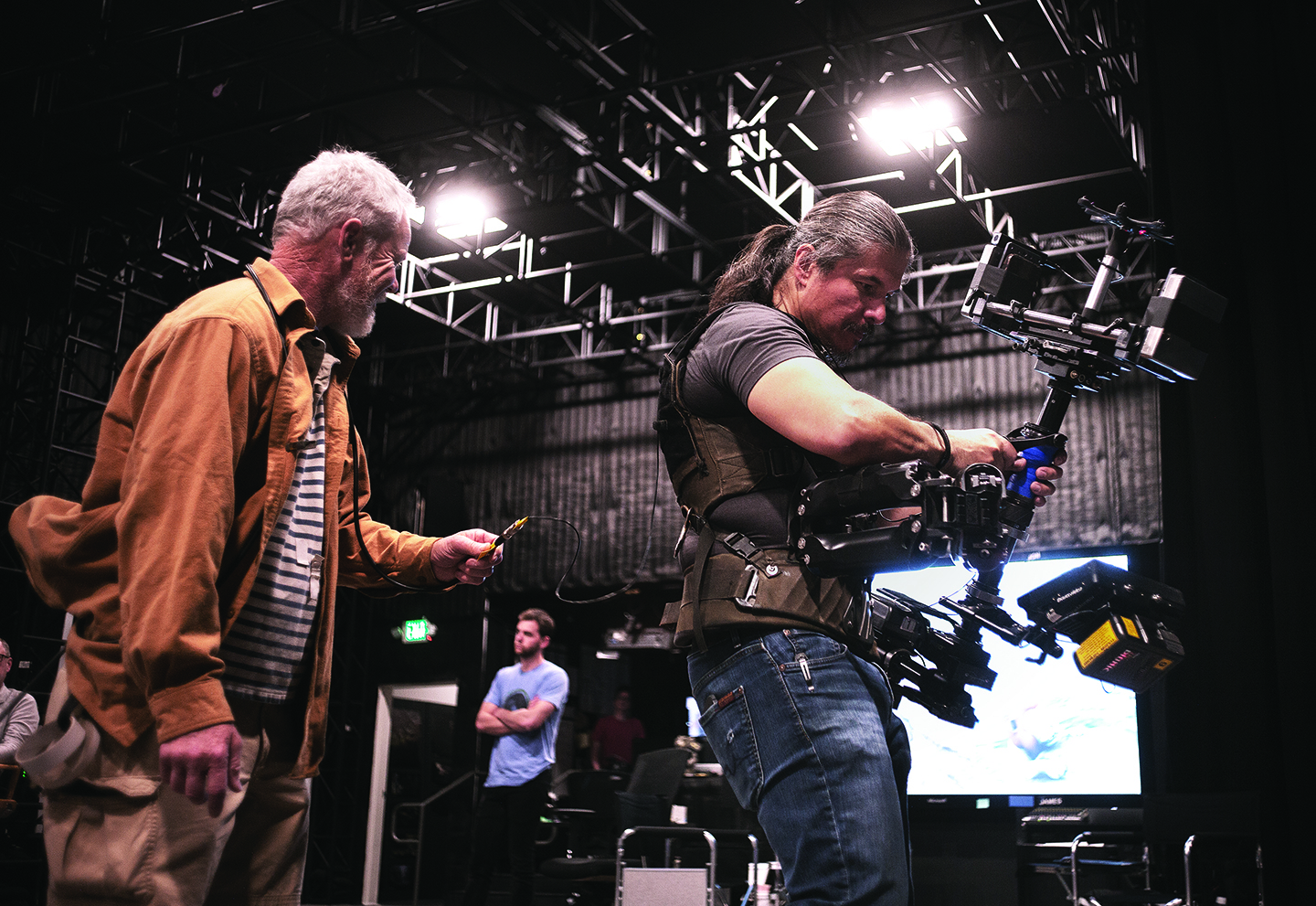
Legato — who was a key member of the virtual-camera crew in addition
to his role in developing the technology — adds, “We’re essentially
motion-capturing the Steadicam operator attached to the Steadicam or a
dolly grip attached to the dolly. With the game engine, everything is
live and under your control. You just walk over to the place that seems
the most appropriate for you to film it. And because it’s live, you can
say, ‘Let me get a little lower or a little higher, or let me try this
same position with a 20mm instead of a 24.’ You’re tapping into your
on-set intuition, which is ultimately years and years of experience,
instead of overintellectualizing it.”
With these tools at their disposal, Deschanel and crew could not only
capture the motion and composition of their virtual cinematography, but
make visual design choices as well. “I would sit with [lighting
director] Sam Maniscalco, who was my gaffer, with the files of all the
sets,” Deschanel recalls. “We had a choice of 350 different skies to
give us the right mood for every scene. It was just like being a
cinematographer [in a traditional environment], but having far more
control than you normally would. On a [traditional set], you don’t have
control over the clouds and sky, so you have to follow the sun
throughout the day. It was exciting and a lot of fun — I was really
surprised.” — Noah Kadner
From left: The Lion King director Jon Favreau, Deschanel and production designer James Chinlund explore the previsualized world.
A few weeks ago, at
our Unite Asia conferences, we announced that we are developing new
multiplayer tools, technologies and services for Unity developers. The
internal project name for this is UNET which simply stands for Unity
Networking. But our vision goes well beyond simple networking.
As you
all know, the Unity vision is to Democratize Game Development. The Unity
Networking team wants to specifically Democratize Multiplayer Game
Development. We want all game developers to be able to build multiplayer
games for any type of game with any number of players.
Before joining Unity, members of the
networking team worked mainly on MMOs such as Ultima Online, Lord of the
Rings Online, Dungeons and Dragons Online, Marvel Heroes, Need for
Speed Online and World of Warcraft. We have a lot of passion for and a
ton of experience with making multiplayer games, technology and
infrastructure.
The Unity vision was known to each of us and was always
very appealing.
When the chance to do something truly great like
specializing the Unity vision with multiplayer came up, it was
impossible to decline. So we all left our former jobs and joined Unity
to make this vision happen.
Right now, we’re working hard to deliver
these tools, technology and services so anyone can make their own dreams
of a multiplayer game a reality.
This is of course a pretty big
undertaking, but, like I said, we have all done this before, and we are
all very driven to do it again (because it’s really, really cool!). The
way we have tackled this is to divide our overall goal into phases
which should be familiar to Unity developers.
We take the approach of
releasing a Phase 1, getting feedback from our users, adding that
feedback to our work to make the next phase even better and repeating
that cycle.
For UNET, Phase 1 is what we
call the Multiplayer Foundation – more on that in a bit. Phase 2 is
where we build on Phase 1 to introduce server authoritative gaming with
what we call the Simulation Server, we’ll blog about this later.
Finally, Phase 3 is where we want to introduce the ability to coordinate
multiple Simulation Servers through a Master Simulation Server.
As
usual, exact dates for this are not possible and of course things can
change, especially after gathering feedback from our users. But we can
say that Phase 1 will be part of the 5.x release cycle and Phase 2 is in
R&D right now.
So what do we mean by the Multiplayer Foundation for Phase 1? The main features are as follows:
High performance transport layer based on UDP to support all game types
Low Level API (LLAPI) provides complete control through a socket like interface
High Level API (HLAPI) provides simple and secure client/server network model
Matchmaker Service provides basic functionality for creating rooms and helping players find others to play with
Relay Server solves connectivity problems for players trying to connect to each other behind firewalls
We had some inherent
limitations with our legacy system that we needed to address and with
our greater goal in mind it became clear that we needed to start from
scratch. Since our goal is to support all game types and any number of
connections, we started with a new high performance transport layer
based on UDP.
While it’s true that a lot of games are done quite well
with TCP, fast action games will need to use UDP as TCP holds the most
recently received packets if they arrive out of order.
From this new transport layer
we built two new APIs. We have a new High Level API (HLAPI) which
introduces a simple and secure client/server networking model. If you’re
not a network engineer and you want to easily make a multiplayer game,
the HLAPI will interest you.
We also wanted to address feedback we’d
received on our old system: some users needed to have a lower level
access for greater control. So we also have the Low Level API (LLAPI)
which provides a more socket-like interface to the transport layer. If
you are a network engineer and want to define a custom network model or
just fine tune your network performance, then the LLAPI will interest
you.
The Matchmaker service is used
to configure rooms for your multiplayer game and get your players to
find each other. And finally the Relay Server makes sure your players
can always connect to each other.
We know from our prior
experiences that making multiplayer games involves a lot of pain. So
the Multiplayer Foundation is a new set of easy to use professional
networking technology, tools and infrastructure for making multiplayer
games without this pain.
To even get started, I think it is fair to say
that making a multiplayer game requires a fair bit of knowledge of
networking and protocols. You either overcome the painfully steep
learning curve yourself or find a network engineer to join you.
Once
you’ve gotten past that, you then have to solve the problem of getting
your players to find each other. And once you’ve solved that problem,
you now have to deal with getting players to be able to actually connect
with each other, which can be troublesome when they are behind
firewalls with NAT.
But then if you’ve solved all of that you’ve
created a bunch of associated infrastructure which wasn’t game
development and probably wasn’t fun. And now you have to worry about
dynamically scaling your infrastructure which usually takes a bit of
prior experience to get right.
Our Phase 1 addresses each of these pain
points.
The HLAPI eliminates the need for a deep knowledge of
networking. But the LLAPI is there if you are a network engineer and you
want to do things your own way.
The Matchmaker solves your problem of
getting your players to find each other.
The Relay Server solves your
problem of getting players to be able to connect to each other.
And we
also solved your problem of the associated infrastructure and
dynamically scaling it.
The Matchmaker and Relay Server live in Unity’s
Multiplayer Cloud. So not only do the physical servers scale up and down
based on demand, but the processes scale up and down as well.
We are very excited about UNET
and are eager to share more details. Over the next few weeks we’ll
follow up with more blogs from the rest of the team. We would love to
hear what you think, and we can’t wait to see what you all make with
this in the future.